Kardameshwar Mahadev Temple
An ancient Shiva shrine, a landmark of Kashi’s sacred geography and the traditional first night halt of the Panchakroshi Yatra.

Spiritual importance of Kardameshwar Mahadev
Kardameshwar Mahadev is inseparable from the Panchakroshi Yatra, the ritual circumambulation of Kashi’s sacred territory. The pilgrimage begins traditionally at Manikarnika and follows a circuit around Varanasi. Kardameshwar, at Kandwa, is regarded as its first principal night halt. Pilgrims worship Mahadev here before continuing to the other major halts of the sacred route.
Local sacred tradition attributes the installation of the Shiva linga to Sage Kardama Prajapati. The name “Kardameshwar†consequently joins the sage’s name with Ishvara, Shiva. For devotees, the shrine remembers tapasya, creation, family duty, renunciation and the movement from worldly responsibility towards spiritual knowledge.
The wider sacred complex deepens the experience. Kardama Kund, Kardama Kupa and nearby subsidiary shrines are not merely architectural additions: they form part of the ritual landscape through which generations of pilgrims have understood this place.
History: an ancient temple built in several periods
Kardameshwar is frequently described as one of the oldest surviving temples of Kashi. A more careful historical description is that the site shows successive layers of construction and reuse. Heritage studies identify sculptural fragments associated with an earlier shrine, some dated approximately to the sixth or seventh century. Much of the surviving upper structure is associated with the Gahadavala period of the twelfth and thirteenth centuries.
This layered history explains why visitors encounter a living temple rather than a monument frozen in a single century. Worship, repair, additions and changing local needs have all left their marks. The temple’s distance from the densely built historic centre is also often cited as one reason it survived periods in which many older structures of Kashi disappeared.
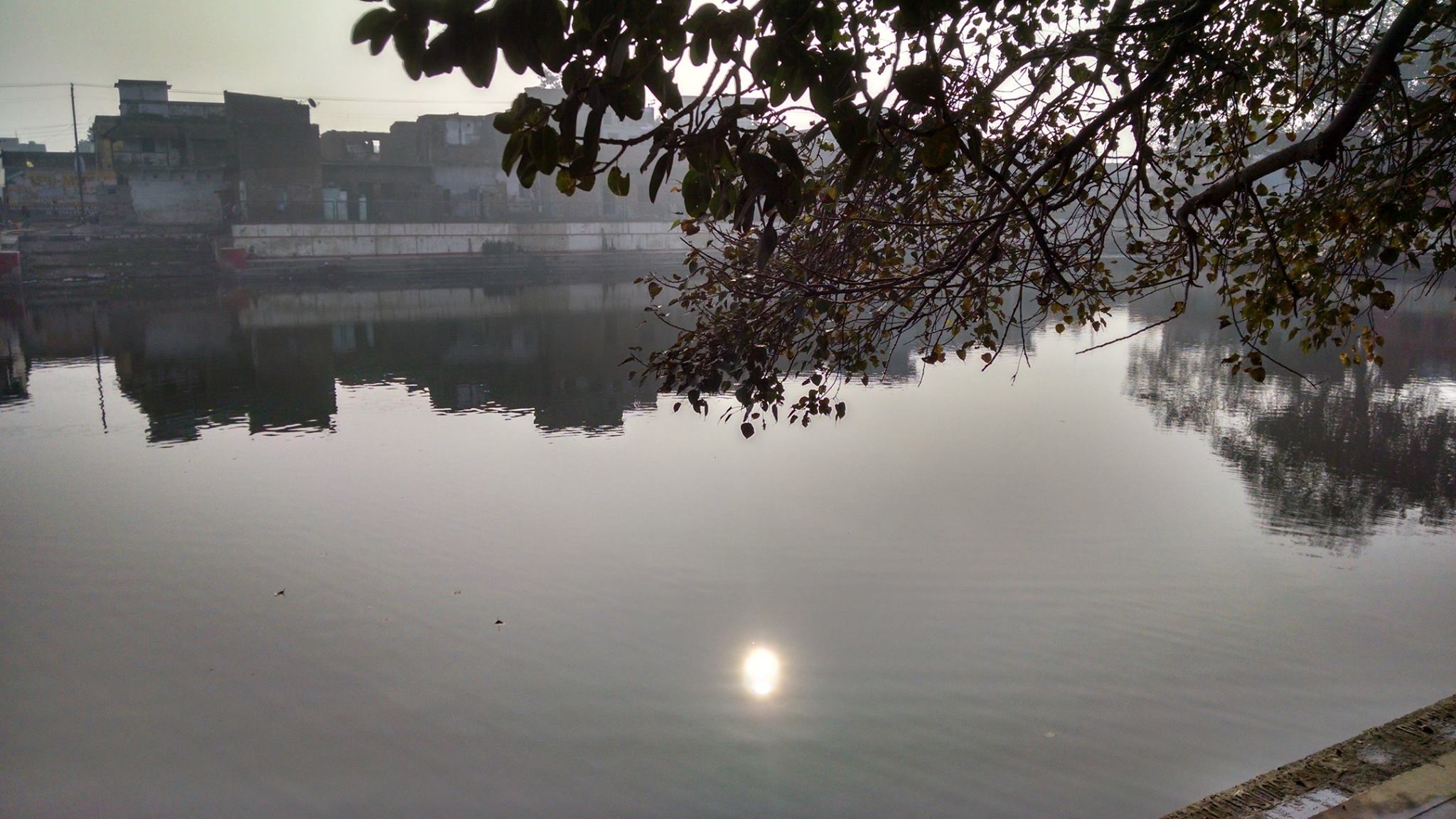
The site is recognised as a protected historic monument under Uttar Pradesh heritage law. Near the temple stands the large Kardama Kund. The present monumental form of the pond is associated with Rani Bhavani of Bengal, whose eighteenth-century patronage supported water bodies and religious structures along the Panchakroshi route.
Kardameshwar in books and sacred literature
Skanda Purana and the Kashi Khanda
The Kashi Khanda of the Skanda Purana is one of the most influential textual sources for Kashi’s sacred geography. The Kardameshwar tradition and the Panchakroshi circuit are understood within this larger network of Shiva lingas, tirthas, wells, ponds and pilgrimage stations. Later pilgrimage manuals, local mahatmyas and studies of the Panchakroshi route continue this textual and ritual memory.
Srimad Bhagavata Purana: Kardama, Devahuti and Kapila
The story of Kardama Muni and Devahuti is narrated at length in the Third Canto of the Srimad Bhagavata Purana, especially Chapters 21–33. Kardama marries Devahuti, daughter of Svayambhuva Manu and Shatarupa. Their children include nine daughters and Kapila. Kapila later teaches his mother a celebrated discourse on spiritual knowledge and liberation, commonly known as the teachings of Lord Kapila.
The Bhagavata narrative is about Sage Kardama and his family rather than a construction history of this Varanasi temple. It is nevertheless essential for understanding why the name Kardama carries such religious importance.
Modern heritage writing
Modern research on the Panchakroshi route—particularly the work of cultural geographer Rana P. B. Singh and collaborators—examines Kardameshwar as a combination of sacred landscape, pilgrimage practice, architecture and living heritage.
Architecture and sculptures to notice
The tall curving Nagara-style shikhara is the temple’s defining external feature. The platform, wall niches and surviving sculptural fragments reward a slow circuit around the structure. The iconography is not confined to Shiva alone; the sacred ensemble includes forms associated with Vishnu, Brahma, Devi, Ganesha, Surya, river goddesses and other deities.
- Uma–Maheshvara: Shiva and Parvati shown together, expressing divine companionship.
- Yogeshvara and dancing Shiva forms: Shiva as the lord of yoga and cosmic rhythm.
- The Hindu trinity: Brahma, Vishnu and Shiva, with their identifying attributes and vehicles.
- Musicians, dancers, nagas and mythical beings: details that connect sacred imagery with the movement and vitality of the cosmos.
- Kardama Kund and Kardama Kupa: water structures integral to the temple’s ritual environment.
Please avoid touching fragile carvings, applying substances to historic stonework or climbing on the platform and architectural elements.
Important festivals and occasions
Festival dates follow the Hindu lunar calendar and change each year. Temple hours, processions and access arrangements may also change; confirm locally before making a special journey.
Planning your visit
- Best experience: visit early in the morning for a calmer darshan and clearer view of the architecture.
- Indicative hours: tourism information commonly lists approximately 5:30 am–12 noon and 4 pm–9 pm, but timings may change. Confirm locally.
- Getting there: Kandwa lies on the southern side of Varanasi, near the Chitaipur side of the city. Auto-rickshaw, taxi or private vehicle is usually practical.
- Allow: about 60–90 minutes if you wish to see the temple, make a respectful circumambulation and visit the kund and associated sacred points.
- Dress and conduct: wear modest clothing, remove footwear where directed, keep voices low and ask before photographing worshippers or the sanctum.
- Accessibility: historic surfaces and the approach around the complex may be uneven. Travellers with limited mobility should arrange assistance.
Pictures of Kardameshwar and its sacred complex
All photographs from the original article have been retained. Open any photograph to see the full-size image.


Google Maps: Kardameshwar Mahadev Temple
Sources and further reading
- Incredible India: Kardameshwar Mahadev Temple
- Cultural Heritage of Varanasi: Kardameshvara Temple and its Sacredscapes
- Panchakroshi Yatra Route: Territory and Temples
- Srimad Bhagavatam, Canto 3, Chapter 21: Kardama and Manu and subsequent chapters through Chapter 33.
- Skanda Purana, Kashi Khanda, in editions and translations dealing with Kashi’s sacred geography and pilgrimage traditions.
This article respectfully distinguishes scriptural tradition, local belief and architectural scholarship. Practical information can change; verify timings and access locally before travelling.
Join the conversation
Ask a question, share a correction, or add your local knowledge to help future visitors experience Varanasi more thoughtfully.
- Questions welcome
- Local knowledge valued
- Respectfully moderated
Write a comment0 Comments
Please comment
Comments are reviewed before publication. Please avoid sharing personal information.